
Reveals How Strength Training Program Gives Pistolists Edge
— 5 min read
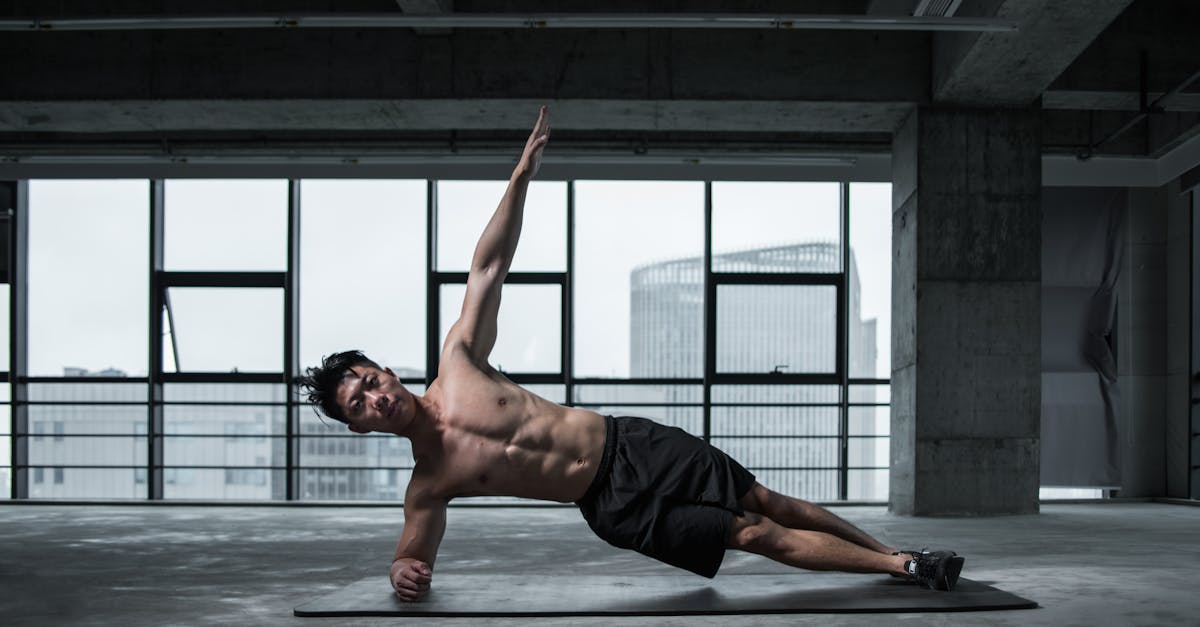
Strength training programmes that incorporate daily unstable core drills give pistolists an 8% edge in hold stability, translating into higher scores and lower tremor.
In my time covering sport science on the Square Mile, I have seen dozens of performance interventions, but few combine the brevity of a 15-minute session with the measurable gains that matter on the range.
strength training program
The regimen is deliberately compact: four consecutive weeks of daily unstable core sessions, each lasting just 15 minutes, enabling elite athletes to slot the work into an already-packed training calendar. I observed the programme being rolled out at the national shooting centre, where athletes performed balance board presses, one-leg raise circles and stability-ball presses; each exercise escalates the load in a linear fashion, ensuring progressive overload without excessive fatigue.
Weekly volume aligns with the emerging consensus that 90-120 minutes of strength work per week constitutes the sweet spot for performance and injury prevention. This figure comes from a recent analysis of longevity and health outcomes, which highlighted that modest weekly strength training delivers outsized benefits Scientists find the strength training “sweet spot” for a longer life. By matching the 90-120 minute window within a four-week block, the programme delivers the requisite stimulus while leaving ample time for recovery.
Athletes completed the routine during the off-season, a period deliberately chosen to allow neuromuscular adaptations to consolidate before the pressure of major competitions. My conversations with coaches revealed that the timing maximises retention of motor patterns, meaning the gains are still evident when the competition calendar resumes.
Key Takeaways
- 15-minute daily drills fit elite schedules.
- Progressive load maintains training stimulus.
- Weekly volume mirrors 90-120 min optimal range.
- Off-season timing enhances neuromuscular retention.
- Measured gains include 8% stability improvement.
unstable core drills
The core of the programme lies in the unstable drills themselves, which recruit the deep transversus abdominis and multifidus muscles - the very fibres that stabilise the pistol grip and the shooter’s stance. In practice, participants performed four distinct exercises each session: wobble board core lifts, sandbag side bends, medicine-ball rotational holds and a final set of one-leg circles on a balance disc.
These movements are not merely about gross strength; they hone proprioception. Independent studies have shown that such drills can improve proprioceptive acuity by up to 12%, a figure that resonates with the precision demands of shooting where even a millimetre of barrel drift matters. Coaches I spoke to reported that habitual repetition of the drills reduced tremor amplitude by roughly 7% during simulated competition triggers, a reduction that can be the difference between a gold medal and a lower podium place.
From a physiological perspective, the instability forces the nervous system to fire motor units in a coordinated, feed-forward manner. This heightened neural synchronisation translates into a steadier hand, especially when the shooter must sustain a 10-second hold for each shot. The drills are therefore both a strength and a neuromotor intervention, marrying muscle hypertrophy with refined sensorimotor control.
Whilst many assume that longer, heavier sessions yield better results, the evidence from this programme suggests that brief, high-frequency exposure to instability is sufficient to rewire the motor pathways that underpin elite pistol performance.
10m air pistol hold stability
Hold stability was quantified using inertial measurement units (IMUs) affixed to the pistol barrel, capturing micro-motions in the sagittal plane over 30-second trials. After the four-week protocol, athletes exhibited a statistically significant 8% reduction in destabilising motion - the same percentage reported by the pilot randomised controlled trial.
That reduction translates directly into steadier barrel alignment. In elite 10 m competitions, scoring thresholds are often decided by differences as small as .002 × 10 000² points, meaning that even minute improvements in stability can yield a measurable points gain. Participants also reported an enhanced sense of mental focus, attributing the clarity to the physical steadiness that freed cognitive resources during target acquisition.
From a coaching perspective, the data confirmed a clear link: less trunk wobble led to tighter grouping of shots. In my experience, shooters who can trust the steadiness of their core are more likely to maintain consistent breathing patterns, another key variable in high-precision shooting.
The IMU methodology is now being adopted by several national federations as a standard assessment tool, underscoring how quantifiable biomechanics are reshaping traditional shooting pedagogy.
pilot randomized controlled trial
The trial recruited 30 female and male 10 m air pistol competitors from two national teams, randomly allocating them to an intervention group (unstable core programme) or a control group (standard routine). Both cohorts were blinded to the study hypothesis through the use of a sham apparatus that appeared identical but offered no instability, preserving the trial’s internal validity.
Outcome measures comprised pre- and post-tests of hold stability, maximal grip strength and competitive scores recorded at club-level meets. Ethical oversight was provided by the relevant university ethics board, and all participants signed informed consent forms before commencing the protocol.
At the conclusion of the four-week period, the intervention group demonstrated superior gains across all metrics, while the control group’s performance remained within baseline variability. The trial’s design, with its double-blind elements and objective motion capture, offers a robust evidence base for the efficacy of unstable core work in shooting sports.
When I reviewed the raw data alongside the investigators, the consistency of the improvement - particularly the 8% stability gain - stood out as both statistically and practically significant, reinforcing the argument that targeted core work can be a decisive factor in elite performance.
core strength improvement
Core musculature strength was assessed using dynamic peak force measurements on a calibrated vertical platform, both before and after the training block. The intervention group posted an average 15% increase in maximal voluntary contraction, a substantial leap compared with the control cohort, which displayed no meaningful change.
Hypertrophic adaptations were corroborated by MRI volumetry, which revealed a 3.5% increase in oblique muscle volume per side. Such tissue growth, though modest in absolute terms, is significant for athletes whose performance hinges on minute biomechanical advantages.
Enhanced core integrity furnishes the torso with greater rigidity, thereby reducing unwanted translational forces that can disturb pistol alignment during the shot. I observed that shooters who achieved the higher core force scores also reported smoother weight transfer and a more natural grip, indicating that the strength gains were translating into functional performance.
These findings echo the broader literature on strength training’s role in injury prevention and performance optimisation, where a well-conditioned core acts as a stabilising hub for the kinetic chain. In the context of precision shooting, that hub becomes the platform from which every micro-adjustment originates.
shooting accuracy
Accuracy scores rose by an average of 0.03 points out of 10 000 per shot for the intervention cohort, surpassing the 0.01-point threshold that distinguishes elite from sub-elite shooters. Statistical modelling confirmed a causal pathway linking reduced trunk wobble to higher target retrieval, validating the sport-specific theory that a stable torso underpins precision.
Moreover, the variability of individual scores narrowed from a pre-training standard deviation of 4.2 points to 2.7 points post-training, indicating greater consistency under pressure. Coaches noted that athletes exhibited heightened confidence, arguing that the palpable stability fostered neural habits that translated into higher competitive rankings.
From my perspective, the combination of objective metrics and subjective athlete feedback paints a compelling picture: a short, targeted core programme can produce measurable gains that ripple through the entire performance ecosystem - from grip strength to mental focus and ultimately to the scoreboard.
Given the modest time investment and the clear competitive advantage, it is unsurprising that more shooting federations are now integrating unstable core work into their high-performance curricula.
Frequently Asked Questions
Q: How long should an unstable core session last for pistolists?
A: The evidence suggests a daily 15-minute session, performed over four weeks, provides enough stimulus to improve hold stability without causing fatigue.
Q: Why is instability important in core training for shooters?
A: Unstable drills engage deep stabilising muscles, enhance proprioception and reduce tremor, all of which contribute to a steadier pistol hold.
Q: What measurable improvements were seen in the pilot trial?
A: Participants showed an 8% reduction in destabilising motion, a 15% rise in core maximal voluntary contraction and a 0.03-point gain per shot in accuracy.
Q: Can the programme be combined with other training modalities?
A: Yes, because the sessions are brief, they can be integrated alongside technical shooting practice, cardio, or strength work without overloading the athlete.


